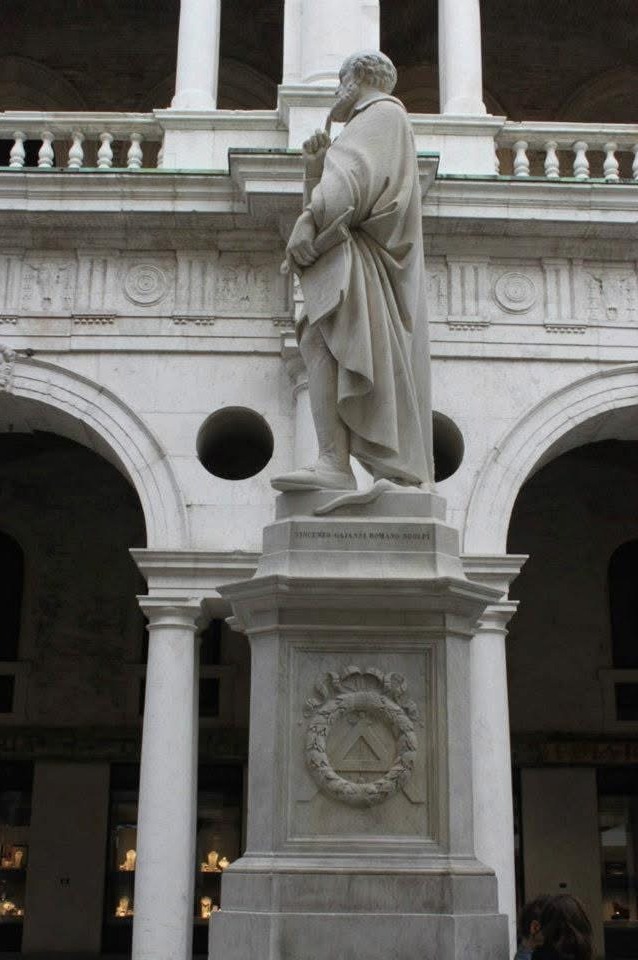
Andrea Palladio: Classical Architecture for a New Age

Andrea Palladio (1508–1580) was born Andrea di Pietro della Gondola in Padua. He trained as a stonecutter and moved to Vicenza as a young man, where he developed the practical knowledge of materials and construction that would remain central to his work. A decisive influence was the Vicentine humanist Giangiorgio Trissino, who encouraged his study of classical architecture and gave him the name Palladio. Visits to Rome allowed him to examine ancient buildings firsthand. He brought those lessons back to the Veneto, adapting them to the houses, civic buildings and churches of his own time.
Vicenza became the setting for some of his most important experiments. For the city’s medieval town hall, now known as the Basilica Palladiana, he designed a new classical envelope of loggias, using repeated arches to give an irregular existing structure a coherent public face. In his palaces and villas, proportion was equally important, but it served everyday purposes: rooms, entrances and views were arranged for the people who would use them. Palladio’s achievement lay in making the architectural language of antiquity both adaptable and practical.
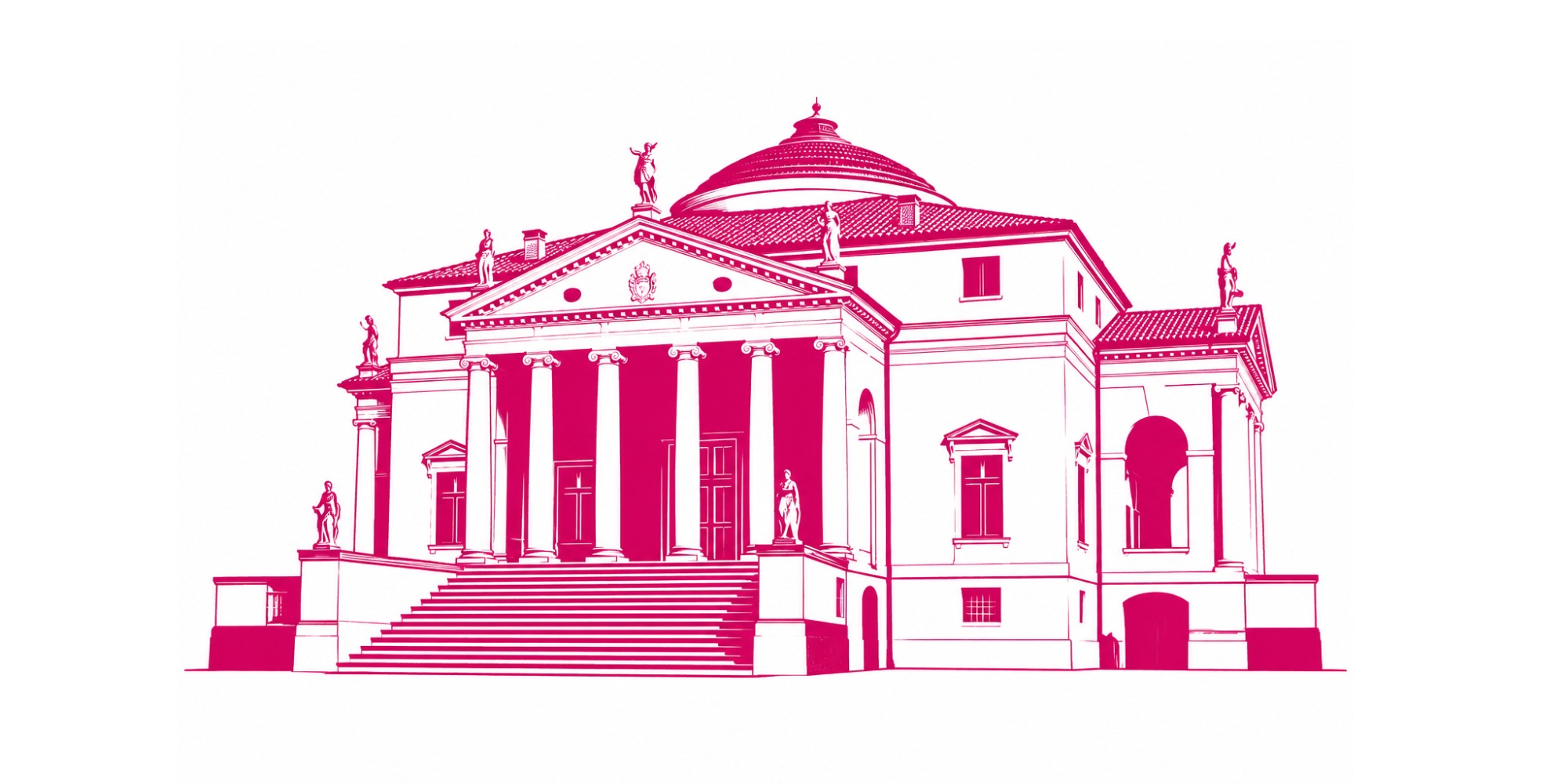
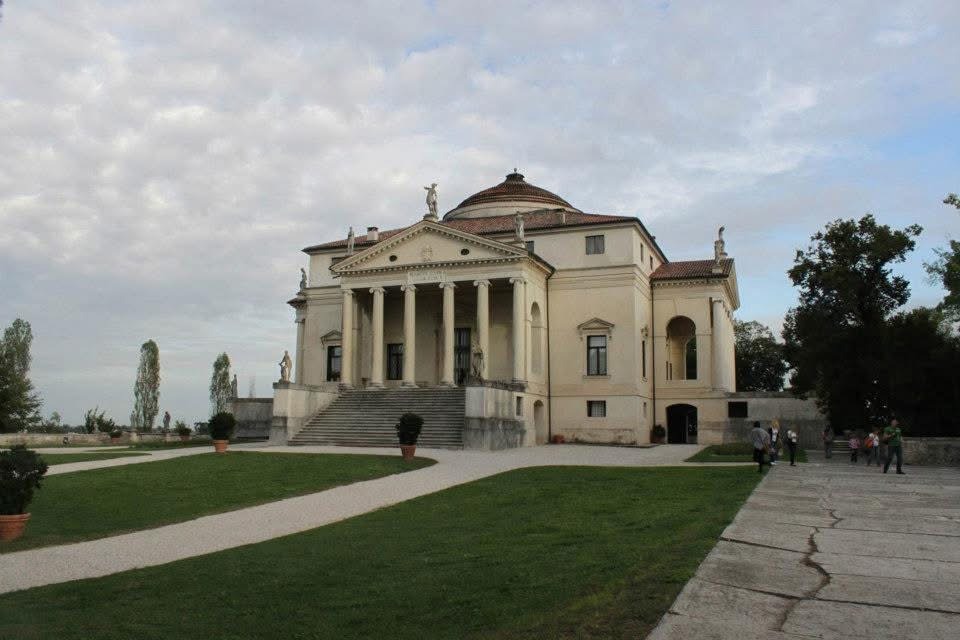
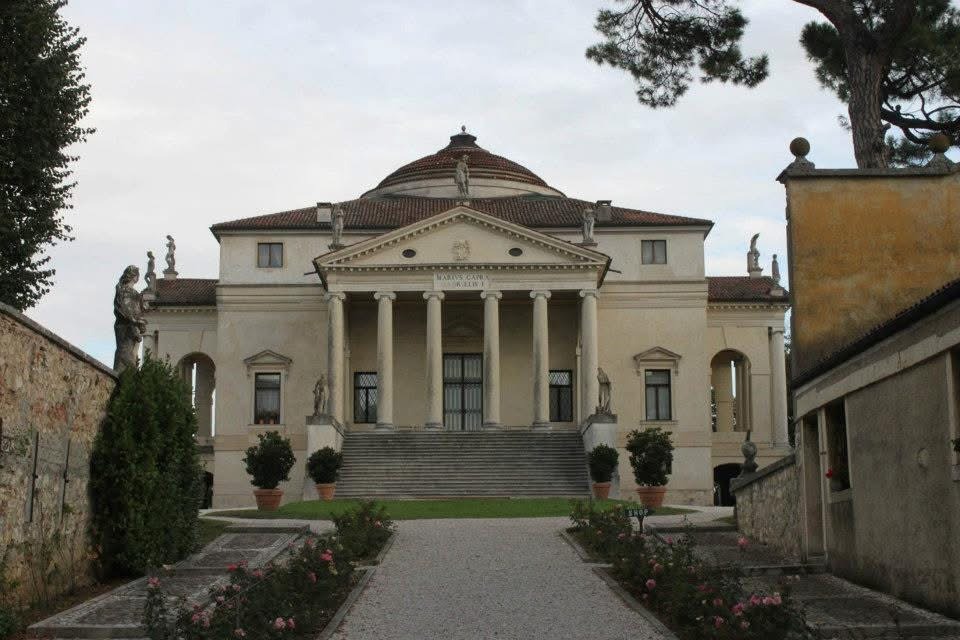
Just outside Vicenza, Villa Almerico Capra, known as La Rotonda, gives that language an exceptionally clear form. Designed for Paolo Almerico in 1566, it has a central domed hall and four temple-like porticoes facing the surrounding landscape. Each side offers an entrance and a different view. The villa was habitable during Palladio’s lifetime, although its construction and finishing continued after his death. Its symmetry made it an influential model, while its four outward-looking façades tied the design closely to its site.
Palladio also designed spaces of remarkable invention on a smaller scale. In the former monastery of Santa Maria della Carità in Venice, now part of the Gallerie dell’Accademia, his scala ovata—an oval staircase with an open centre—turns movement between floors into an architectural experience. Its cantilevered stone steps follow a continuous curve, showing that Palladio’s command of classical order did not limit his willingness to experiment with form.
His major works include the Basilica Palladiana, Palazzo Chiericati and the Teatro Olimpico in Vicenza; La Rotonda, Villa Barbaro and other villas across the Veneto; and the churches of San Giorgio Maggiore and Il Redentore in Venice. His most influential written work is I Quattro Libri dell’Architettura (The Four Books of Architecture), published in Venice in 1570. By presenting architectural principles alongside drawings and designs, Palladio made his ideas available far beyond the buildings themselves. Together, the work and the treatise gave rise to Palladianism, an architectural influence that travelled across Europe and beyond.