
Jardin Majorelle: A Painter’s Garden in Marrakech

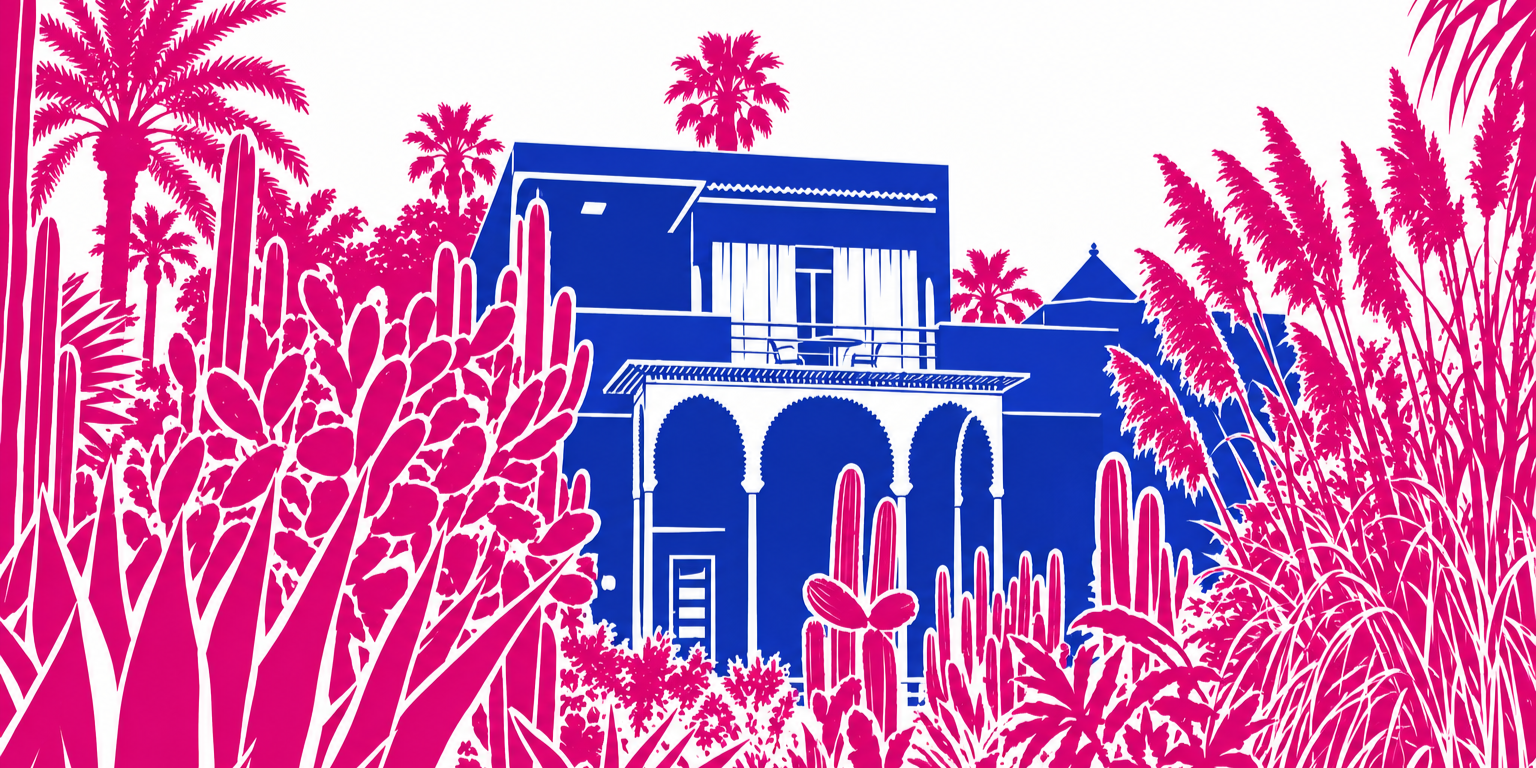
Beyond the busy streets of Marrakech, Jardin Majorelle feels like a world composed by an artist. Narrow paths move between bamboo, palms and cacti; water reflects the foliage; sudden walls of intense blue appear through the green. The garden bears the name of Jacques Majorelle, the French painter who spent decades shaping it. It is both a botanical collection and a study in how architecture, planting and colour can transform one another.
Majorelle settled in Marrakech in 1919, when Morocco was under French colonial rule. He acquired land near the city’s palm grove in the 1920s and built a house known as Villa Bousafsaf. Inspired by Moroccan architectural traditions, the villa became part of a growing landscape of pools, paths and plants gathered from different parts of the world. Majorelle treated the garden as a living work: something to observe, cultivate and continually revise. He opened it to the public in 1947.
Two Buildings, Two Architectural Languages
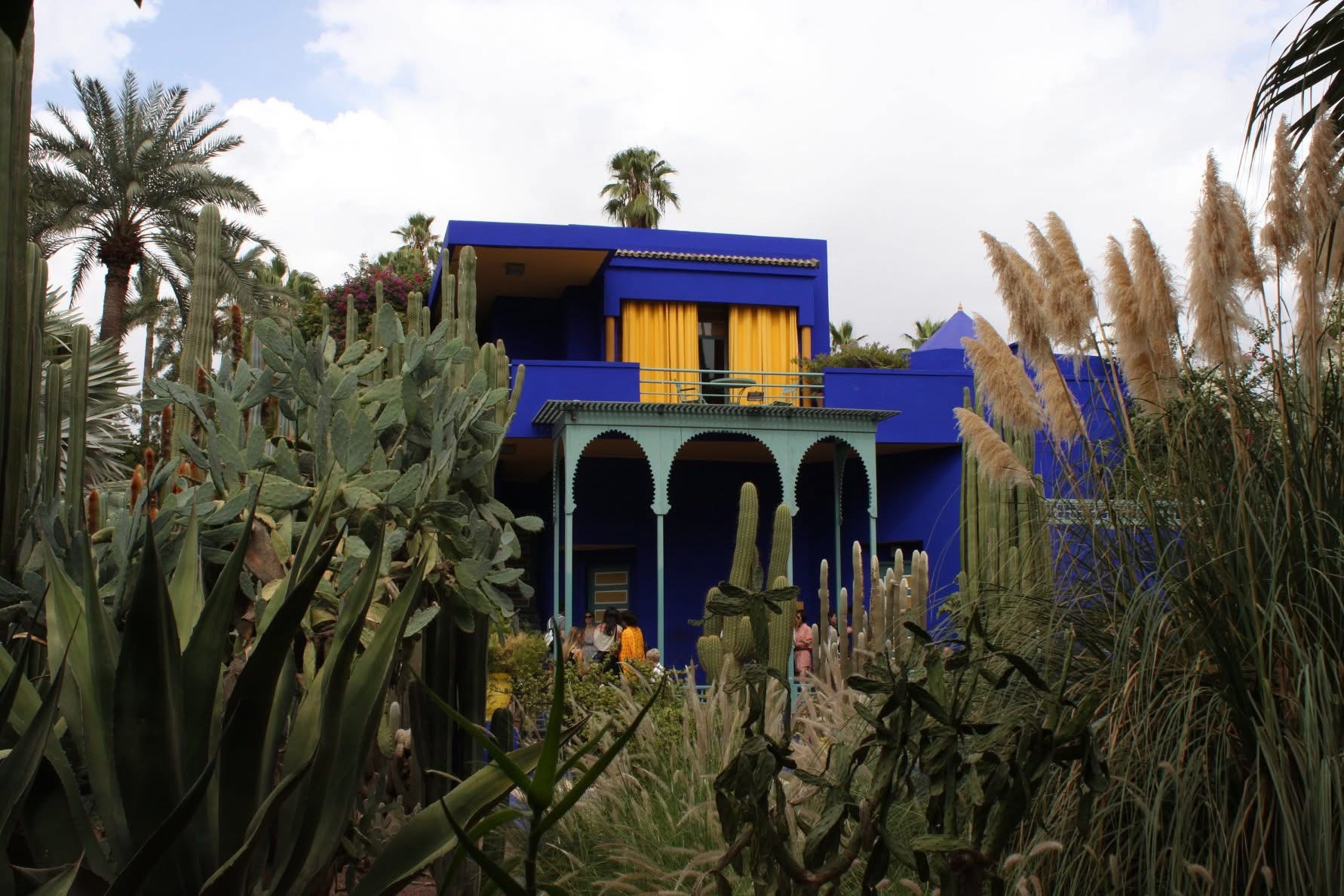
The property’s best-known building is often mistaken for Majorelle’s original house. In fact, the vivid blue structure seen in photographs was his painting studio. Designed by architect Paul Sinoir in 1931, it brought a markedly modern, Art Deco character to the garden. Its simple volumes and strong geometric lines contrast with the luxuriant planting around it. Majorelle worked on large paintings downstairs and used the upper floor as living space. The earlier Villa Bousafsaf, later renamed Villa Oasis, is a separate building.
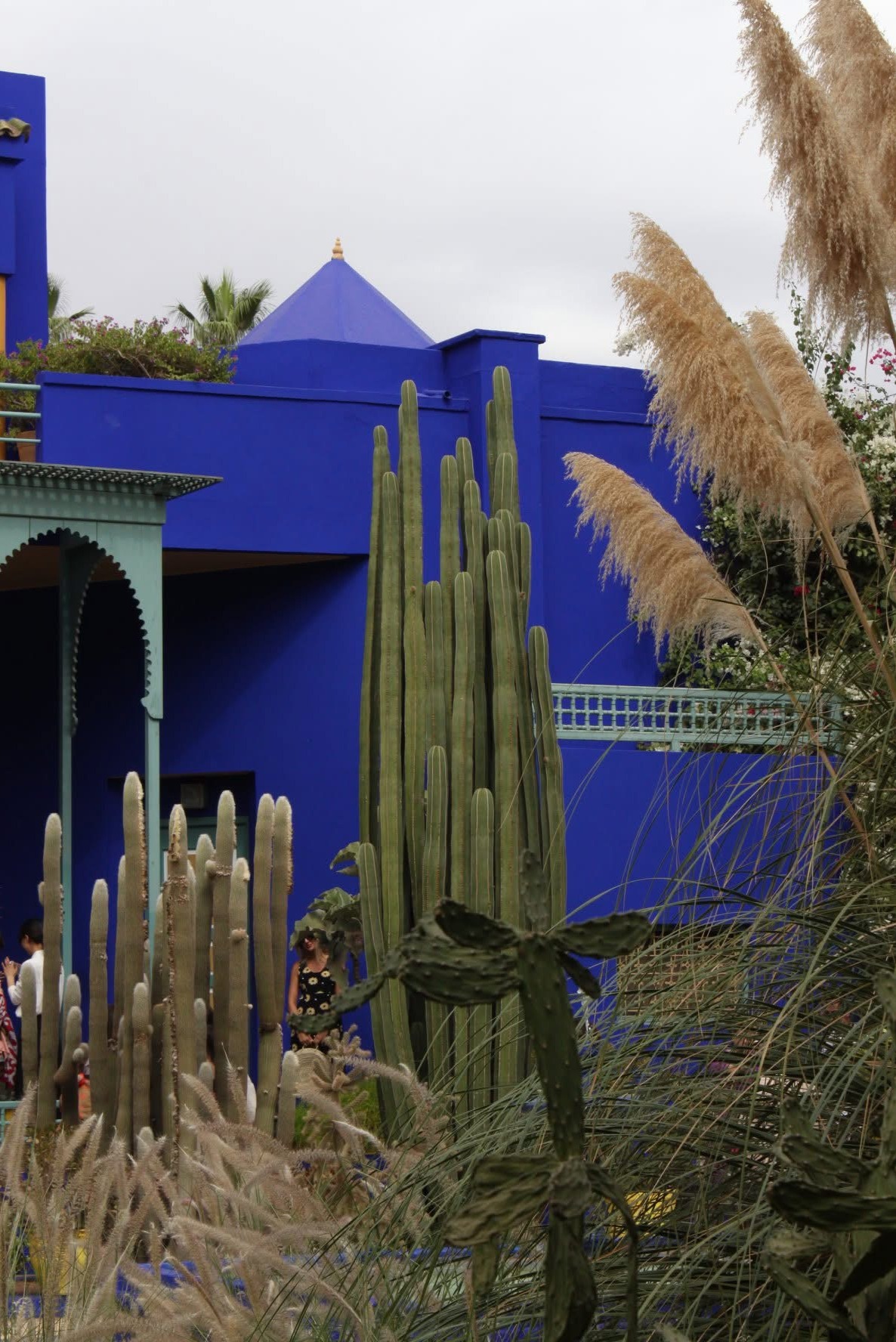
The studio’s architecture depends on its setting. A long pool extends its geometry into the garden, while dense vegetation softens the building’s sharp edges. Paths do not reveal everything at once: they frame a façade, conceal it, then bring it back into view through leaves and reflected light. This sequence gives a relatively compact garden the richness of a much larger landscape.
The Blue That Became a Name
In 1937, Majorelle began using the brilliant ultramarine now known as Majorelle Blue throughout the property. Against it, green leaves become more vivid, yellow pots and details seem brighter, and the warm tones associated with Marrakech gain greater intensity. The blue is neither a neutral backdrop nor a finish applied after the design was complete. It is one of the garden’s principal architectural materials: it defines surfaces, catches light and gives the place its unmistakable identity.
From the Painter to the Fashion Designer
After Majorelle’s death in 1962, the garden deteriorated. In 1980, fashion designer Yves Saint Laurent and his partner Pierre Bergé bought it to save it from a proposed development and undertook its restoration. They lived in the former Villa Bousafsaf, renaming it Villa Oasis. Majorelle’s studio later became a museum devoted to the arts of Morocco’s Amazigh peoples.
Saint Laurent, born in Algeria in 1936, was one of the defining fashion designers of the twentieth century. He and Bergé first visited Marrakech in 1966, and the city became a lasting source of inspiration. Its light and colours entered his creative life, while his work explored striking combinations of colour, art and clothing. The garden’s connection to fashion is therefore more than a famous owner’s name: it joins the visual imagination of two artists, each working in a different medium. A museum dedicated to Saint Laurent stands near the garden today.
Jardin Majorelle remains most compelling as a complete composition. Its architecture does not dominate the plants, and the plants do not hide the architecture. The two continually change each other, while a single extraordinary blue holds the scene together.