
Peter Eisenman: The City as Diagram, Trace and Event

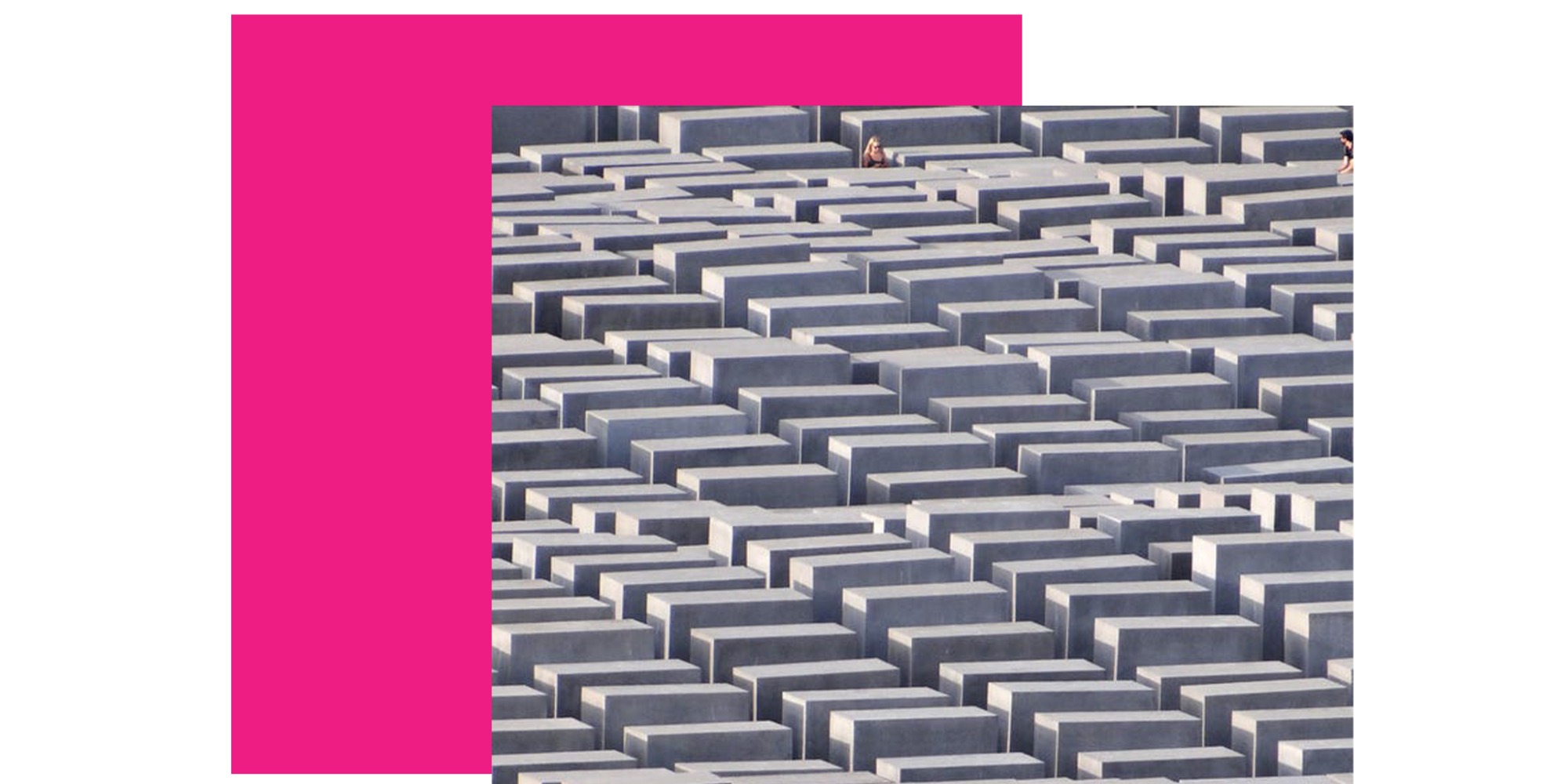
Peter Eisenman is one of the most influential—and controversial—architectural theorists of the late twentieth and early twenty-first centuries. His importance lies not only in his buildings but also in his attempt to redefine architecture and urbanism as intellectual processes. For Eisenman, a city is neither a finished composition nor simply a functional machine. It is a field of overlapping historical traces, grids, movements and events that can be displaced, transformed and interpreted through diagrams.
Eisenman was born on 11 August 1932 in Newark, New Jersey. He studied architecture at Cornell University, Columbia University and the University of Cambridge, where he completed a doctorate. In 1967, he founded the Institute for Architecture and Urban Studies in New York, which became an important centre of architectural theory, exhibitions and publishing.
He first attracted international attention as one of the New York Five, together with Michael Graves, Charles Gwathmey, John Hejduk and Richard Meier. Their work was presented at a 1969 meeting of the Conference of Architects for the Study of the Environment and published in the 1972 book Five Architects. Despite being treated as a group, they never developed a single common theory. Their early projects shared an interest in the formal language of European modernism, particularly Le Corbusier, but their subsequent careers moved in very different directions.
Architecture as a Transformational Process
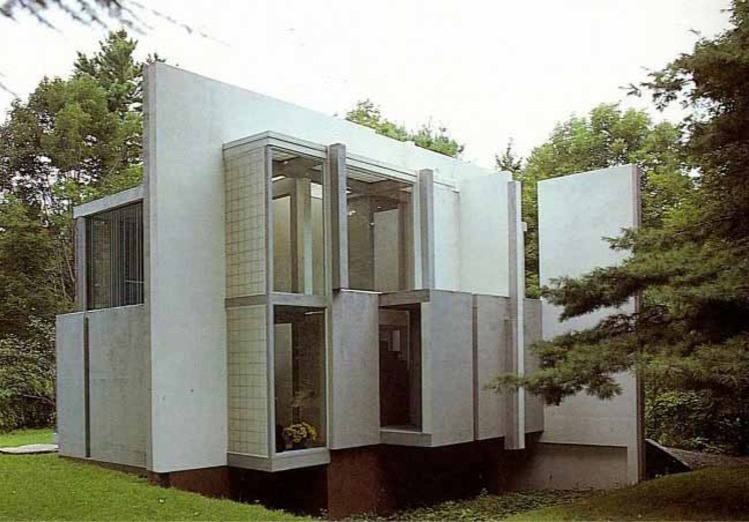
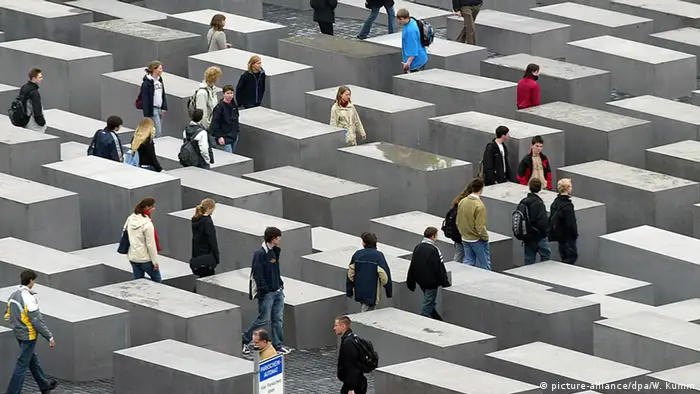
Eisenman’s early houses were generated through sequences of formal operations: grids were shifted, planes cut apart, structural elements displaced and volumes rotated. The final building appeared as a temporary stage in an abstract transformational process. In later works—including the Wexner Center for the Arts, the Memorial to the Murdered Jews of Europe in Berlin, the City of Culture of Galicia and the University of Phoenix Stadium—these operations expanded into larger institutional and landscape systems. His architecture deliberately disrupts familiar ideas of stability, centre, façade and compositional hierarchy.
From the Architectural Object to the Urban Field
Eisenman’s urbanism developed directly from his architectural theory. Conventional planning normally begins with programme, circulation, building type and the division between public and private space. Eisenman did not reject these practical requirements, but he refused to accept them as the sole origin of urban form.
Instead, he used the diagram as a generative instrument. A diagram was not merely a simplified illustration of a completed proposal. It recorded relationships and operations: shifting, rotating, folding, scaling, repeating, erasing and superimposing. The resulting urban project did not represent one ideal order. It revealed the interference between several possible orders.
This distinguished Eisenman from both traditional urban composition and functionalist master planning. Traditional composition arranged streets, squares and monuments into a visually coherent whole. Functionalist planning distributed housing, traffic, industry and recreation according to measurable needs. Eisenman treated the city as a cultural text in which different historical and conceptual systems could remain visible simultaneously.
Cannaregio and Artificial Excavation
The Cannaregio project for Venice, designed in 1978, marked Eisenman’s transition from autonomous architectural objects to the interpretation of urban territory. The project did not attempt to imitate Venice or complete its historic fabric in a conventional manner. Instead, Eisenman superimposed several conceptual systems on the site.
One layer was derived from Le Corbusier’s unbuilt Venice Hospital. Its grid was extended across Cannaregio like the trace of an absent architecture. Eisenman then inserted repeated versions of one of his own experimental houses at different scales. Some became objects, others voids or impressions in the ground.
The project treated the site as an archaeological field—but the archaeology was partly fictional. Eisenman called this method artificial excavation: the architect “discovers” traces that never physically existed but that belong to the cultural and architectural memory of the place.
Urban intervention therefore becomes neither historical reconstruction nor complete tabula rasa. It creates a dialogue between what exists, what has disappeared, what was planned but never built and what is newly invented.
Berlin and the Layered City
Eisenman developed similar ideas in his proposal for the IBA social-housing project in South Friedrichstadt, Berlin, designed in 1980–1981. Berlin was understood as a city fragmented by war, political division and successive processes of destruction and reconstruction.
Rather than restoring a single historical image, Eisenman superimposed different grids and traces associated with the city’s previous configurations. The resulting building and urban block expressed the misalignment between these systems. History was not represented by stylistic references; it appeared through displacement, interruption and incomplete correspondence.
This approach differed fundamentally from contextualism understood as visual imitation. For Eisenman, respecting context did not mean reproducing cornices, materials or traditional façades. Context included absences, destroyed structures, unrealized plans and suppressed histories. The city was therefore a palimpsest whose erased layers could be made conceptually present.
Rebstockpark and the Fold
In the Rebstockpark master plan for Frankfurt, developed between 1990 and 1992, Eisenman moved from superimposed grids towards the concept of the fold. The project challenged the conventional opposition between figure and ground, building and landscape, object and urban field.
The starting point was the familiar German perimeter block. Instead of repeating it as a static type, Eisenman subjected the block and street grid to a sequence of folding operations. Lines of movement, building volumes and landscape surfaces became parts of a continuous but distorted field.
The fold did not simply produce visually unusual buildings. It was intended to accommodate change and destabilize rigid urban categories. Housing, circulation, landscape and public space could interact without being organized by one dominant axis or centre. Urbanism became the management of relationships and events rather than the placement of isolated objects.
However, Rebstockpark also demonstrated the difficulty of translating a theoretical diagram into construction. Economic, regulatory and functional requirements simplified parts of the original proposal. This tension between conceptual system and ordinary urban development remained characteristic of Eisenman’s planning work.
Writings and Urban Theory
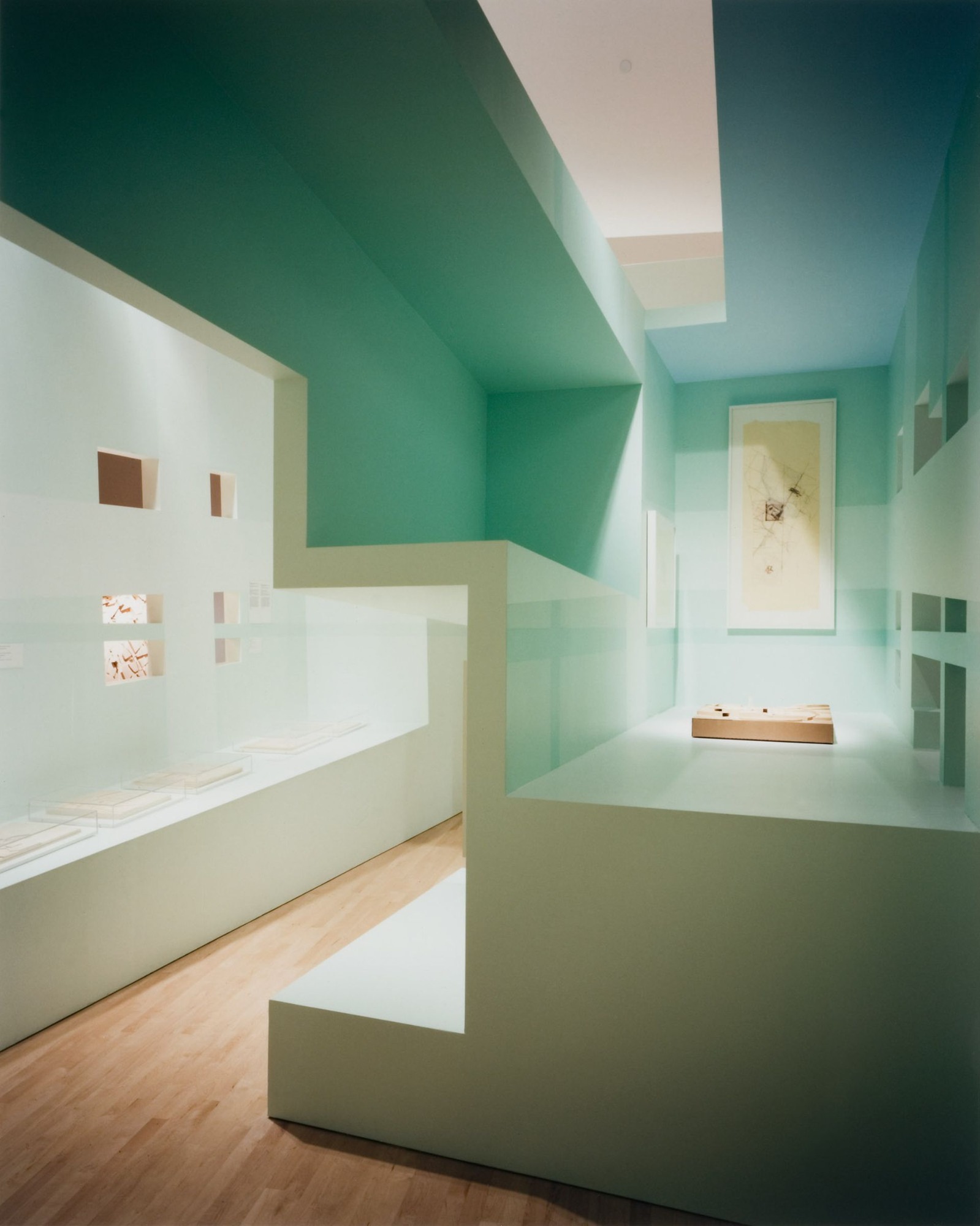
Eisenman did not write a single conventional treatise on city planning comparable to Ebenezer Howard or Eliel Saarinen. His urban ideas are distributed among theoretical essays, project texts, interviews and books such as Diagram Diaries, Written into the Void and Eisenman Inside Out. The publication Cities of Artificial Excavation: The Work of Peter Eisenman, 1978–1988 brought together several of his most important urban investigations.
His contribution to urbanism is therefore primarily methodological. He proposed that a project could begin by reading the invisible structures of a site: historical grids, demolished buildings, unrealized proposals, geographic conditions and cultural memories. These layers could then be transformed through scaling, displacement, repetition or folding.
Unlike the Garden City tradition, Eisenman did not offer a comprehensive social model. Unlike functionalist planning, he did not search for the most efficient distribution of urban activities. Unlike traditional civic design, he did not seek a stable and harmonious final composition. His urbanism remained speculative, critical and deliberately unresolved.
Eisenman’s principal contribution was the idea that urban form need not conceal contradiction. A city can retain evidence of competing histories and incomplete transformations. The master plan is consequently not a finished image of the future but a diagram capable of generating unexpected relationships over time.