
The New York Whites
or Why American Architecture Became White

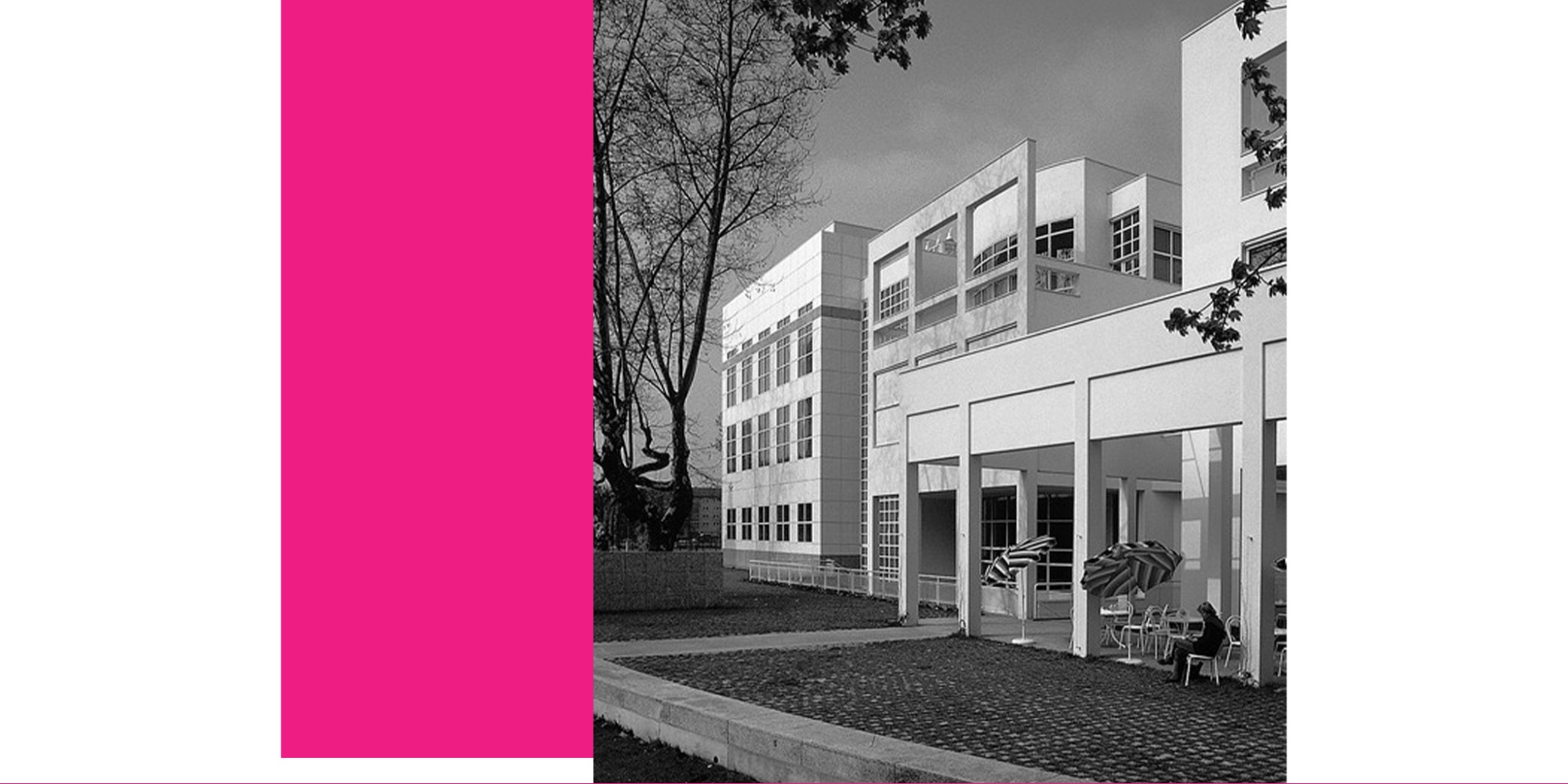
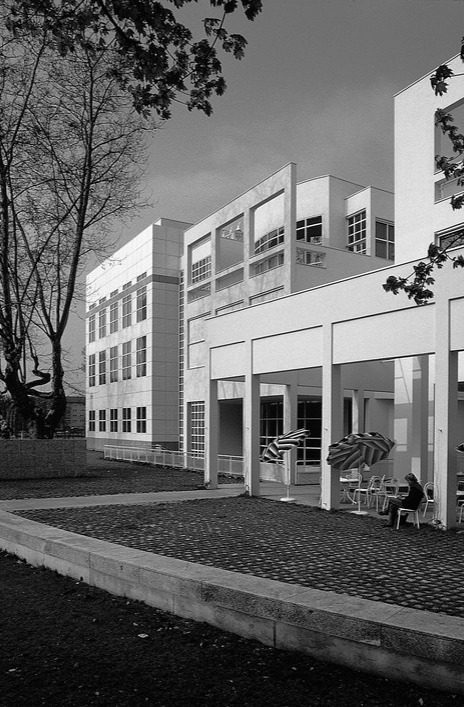
In the 1960s and 1970s, a particular image came to dominate American architectural culture: the white building. It had smooth walls, abstract volumes, flat roofs, structural grids and carefully framed openings. Ornament, colour and conventional historical references were removed. Architecture was expected to appear rational, autonomous and intellectually purified.
The group that expressed this tendency most clearly became known as the New York Five, or simply the Whites: Peter Eisenman, Michael Graves, Charles Gwathmey, John Hejduk and Richard Meier. Their work was presented at a 1969 meeting of the Conference of Architects for the Study of the Environment at the Museum of Modern Art and published in the influential 1972 book Five Architects.
They were not a formal partnership and never produced a collective manifesto. Nevertheless, their early houses shared such an obvious visual and theoretical language that critics treated them as a movement.
Why Did American Architecture Become White?
Architectural whiteness did not originate with the New York Five. It entered American culture through European modernism, particularly the work of Le Corbusier, Walter Gropius, Ludwig Mies van der Rohe and the Bauhaus. The Museum of Modern Art’s 1932 exhibition Modern Architecture: International Exhibition, organized by Henry-Russell Hitchcock and Philip Johnson, helped establish European modernism as the model of architectural progress.
White represented a rejection of the nineteenth-century city: its dark interiors, applied ornament, historical styles and crowded industrial streets. It suggested sanitation, sunlight, technological precision and a new beginning. A white wall appeared to have no age, nationality or social class. It could be presented as universal.
After the Second World War, European modernism became the institutional language of American universities, corporations and cultural organizations. Glass-and-steel office towers represented efficiency, while white suburban houses suggested an optimistic and orderly modern life. Architectural photography strengthened this image: black-and-white photographs transformed white walls, dark openings and sunlight into dramatic abstract compositions.
In reality, early modern architecture was not always colourless. Le Corbusier, De Stijl and the Bauhaus frequently used strong colours. Nevertheless, architectural publications gradually reduced modernism to a recognizable formula: white planes, black shadows and pure geometry.
By the 1960s, this had developed into what might provocatively be called white paranoia—a determination to protect architecture from colour, ornament, popular taste, commercial imagery and historical association. Here, “white” describes an aesthetic and ideological position rather than a racial category. Whiteness became a sign of disciplinary seriousness: the cleaner the building, the more “architectural” it appeared.
The New York Five inherited this condition but transformed it into a conscious theoretical project.
The Philosophy of the Whites
The Five believed that mainstream American modernism had lost its intellectual energy. It had become a repetitive commercial system of glass façades, standardized offices and suburban development. Their response was not to abandon modernism but to return to its experimental beginnings.
Their most important reference was Le Corbusier’s architecture of the 1920s: the free plan, pilotis, ramps, roof terraces, geometric volumes and the distinction between structural frame and enclosing wall. They also studied Giuseppe Terragni, De Stijl and the formal analyses of Colin Rowe.
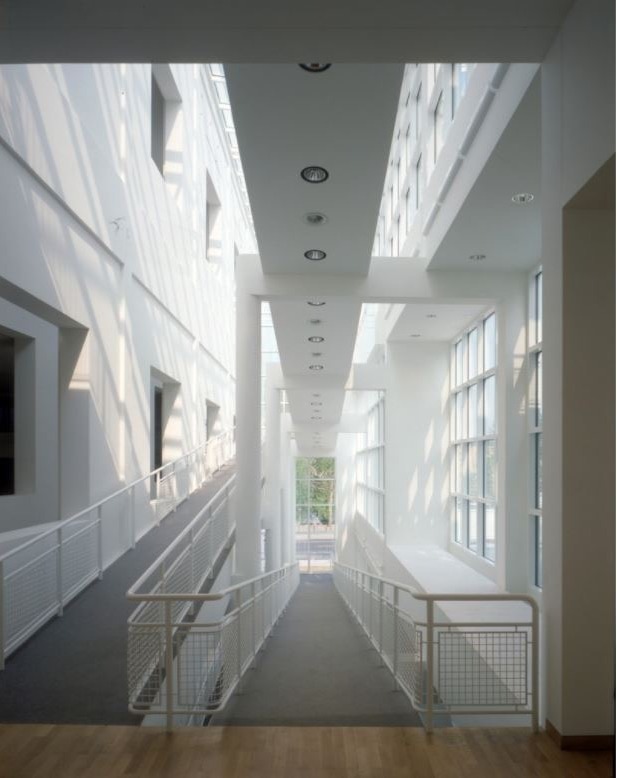
For the Whites, a building was a system of relationships between walls, columns, planes, voids and circulation. A column might be placed close to a wall without becoming part of it. A stair could behave as an independent object. A wall might extend beyond the enclosed volume to reveal an invisible geometric order.
White surfaces helped make these relationships legible. Colour and ornament might distract from the operations of the plan, while white reduced the building to light, shadow, proportion and structure. Whiteness was therefore not simply decoration: it was a method for presenting architecture as an autonomous language.
Five Architects, Five Directions
Peter Eisenman treated architecture as a sequence of transformations. His early houses were generated by shifting, rotating, cutting and superimposing grids. In House VI, certain elements appear intentionally displaced from ordinary construction and use because they record the theoretical process that produced the building. Eisenman later moved from white formalism towards deconstruction, diagrams and urban “artificial excavation.” His principal works include the Wexner Center for the Arts, the City of Culture of Galicia and the Memorial to the Murdered Jews of Europe in Berlin.
Michael Graves initially designed white modernist houses such as the Hanselmann House and Snyderman House. He subsequently became the most visible defector from the group’s original position. During the 1970s, Graves introduced colour, ornament and historical references, becoming a central figure in American Postmodernism. The Portland Building and Humana Building openly rejected the neutrality of the white modernist box.
Charles Gwathmey became known through the Gwathmey Residence and Studio in Amagansett. Its white cylinders, cubes and precisely cut openings turned a private house into an abstract spatial composition. With Robert Siegel, he later adapted this formal vocabulary to larger residential and cultural projects, including the renovation and extension of Frank Lloyd Wright’s Guggenheim Museum.
John Hejduk was the most poetic and conceptually elusive of the Five. His Diamond Houses, Wall Houses and later Masques treated architecture as a combination of geometry, narrative and memory. Many remained unbuilt. As dean of the Cooper Union School of Architecture, Hejduk’s teaching influenced several generations more profoundly than his relatively small collection of completed buildings.
Richard Meier remained the most faithful to white architecture. The Smith House and Douglas House combine structural grids, ramps, white planes and extensive glazing with controlled views of the landscape. Meier later expanded this vocabulary in the High Museum of Art, the Barcelona Museum of Contemporary Art, the Jubilee Church and the Getty Center in Los Angeles. In his work, white became almost a permanent signature—a surface designed to register the changing colour of daylight.
The Whites and the Grays
The New York Five were criticized by architects known as the Grays, including Robert Venturi, Charles Moore, Robert A. M. Stern, Romaldo Giurgola and Allan Greenberg. The Grays argued that architecture could not isolate itself from history, symbolism, local character and popular culture.
For them, the white building’s supposed neutrality was an illusion. Removing ornament did not remove meaning; it merely replaced traditional meanings with the cultural authority of elite modernism. A white villa was no less symbolic than a classical façade—it simply belonged to a different architectural ideology.
This debate exposed the central contradiction of the New York Whites. They wanted to liberate architecture from convention, yet their purified language soon became another convention. White, initially a symbol of revolution, became an academic uniform.
Legacy
The New York Whites did not literally make all American architecture white. They made whiteness intellectually prestigious. Their houses, drawings, exhibitions and publications established abstract formal analysis as a central part of American architectural education.
Their unity did not last. Eisenman moved towards instability and deconstruction; Graves embraced colour and historical symbolism; Gwathmey developed an elegant institutional modernism; Hejduk transformed architecture into poetic narrative; and Meier continued refining luminous white geometry.
Why, then, did American architecture become white? Because whiteness promised universality, cleanliness, progress and freedom from history. It reproduced beautifully in photographs, could be analysed as pure form and allowed architects to present their discipline as intellectually autonomous. The New York Five carried this promise to its most sophisticated—and perhaps most obsessive—conclusion. Their “white paranoia” was both a creative experiment and a warning: when purification becomes an architectural ideology, the absence of colour can become as forceful a statement as colour itself.